Authenticator App - SafeAuth
- 4.4
- Rating
- 10.00M
- Installs
- Free
- Price

 Analysis by App-foxy
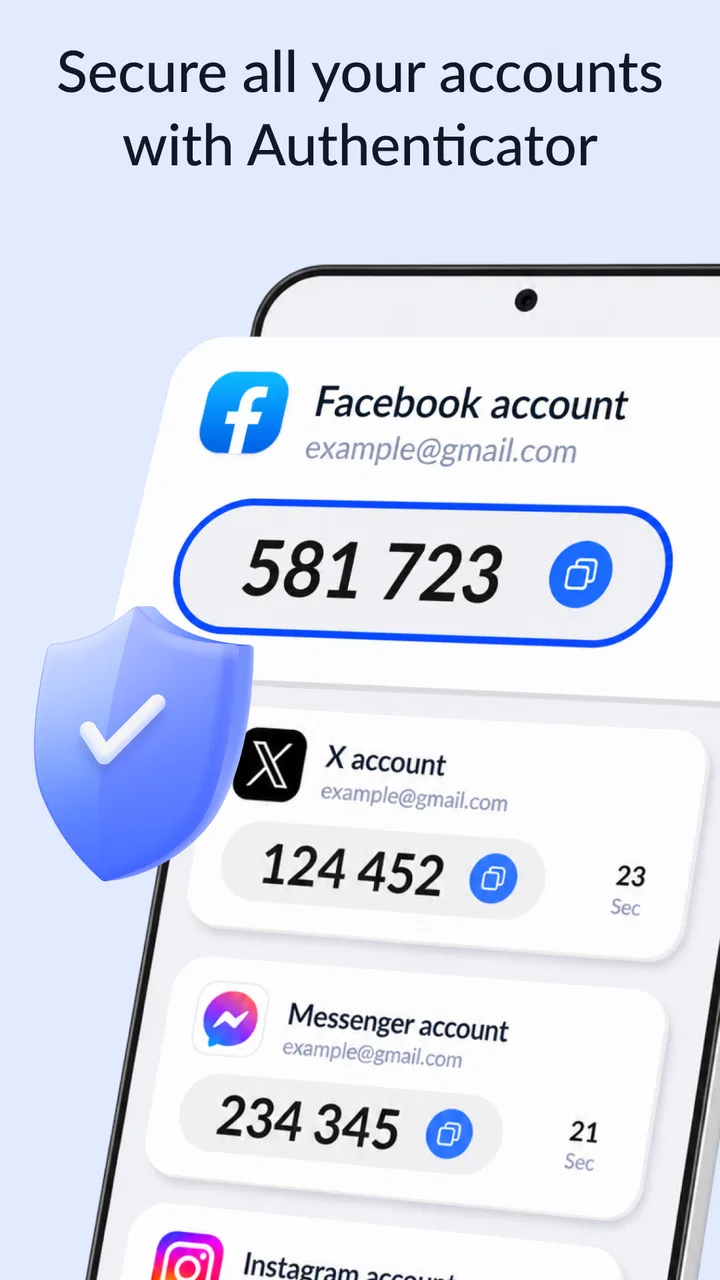
When I first opened Authenticator App - SafeAuth, I approached it with a simple goal: add a second layer to the accounts I use every day without turning every login into a chore. SafeAuth Services presents this free Tools app as a straightforward authenticator, and that is exactly the role it tries to fill. It generates temporary verification codes, keeps access to the app behind PIN and biometric protection, and gives people a familiar alternative to receiving codes by text message.
That sounds modest, but an authenticator becomes important at the moment a login goes wrong: a password has been reused, a new phone is being set up, or a service suddenly asks for an extra verification step. In my experience, the value of this kind of tool is less about how impressive it looks and more about whether I can find the right account quickly, read the current code, and complete the handoff before the code changes.
The app has grown into a well-known option, with an average rating of 4.4 from around 140 thousand ratings and more than 10 million installs. Those figures suggest that many people are comfortable using it as part of their account-security routine. It is free to install, rated for Everyone, and works on Android versions from 6.0 onward. The current release is version 1.6.8, while optional purchases range from $4.99 to $99.99 per item.
You May Also Like

 Blood Strike: 2.5 Anniversary
Blood Strike’s Loadouts Turn Every Drop Into a Tactical Gamble
A close look at Blood Strike’s custom loadouts: how fast access to signature weapons reshapes its battle royale rhythm, rewards preparation, and narrows the gap between fights.

 Pandora - Music & Podcasts
Pandora’s Music Is Easy to Start, but Harder to Recover
Pandora’s strength is its low-effort path from a seed to a station. Its weak spot is how much confidence it asks you to place in connection, setup, and quiet recovery.

 8 Ball Pool
 Is Built on Rivalries, Rematches, and Routine
A close look at the rivalries, rematches, shared routines, and unanswered safety questions that turn a quick pool match into a persistent mobile community.

 Samsung Music
’s Quiet Strength Is Playing What You Already Own
Its reach comes less from spectacle than from dependable access to a personal library. That simplicity is both the app’s strongest retention engine and its ceiling.

 AccuWeather: Weather Radar
AccuWeather Review: A Quick, Clear Forecast for Everyday Decisions
For everyday plans, the best forecast is the one you can understand quickly. AccuWeather makes rain timing, radar, and local conditions easy to act on, with a few trade-offs.

 Hill Climb Racing
Why Hill Climb Racing Still Turns Crashes Into One More Run
A tiny car, a bumpy hill and one more upgrade: Hill Climb Racing keeps resurfacing because its simple chaos makes every near-miss feel personal.
More From Our News Desk



From an unprotected login to a completed sign-in
I look at the moment before a second-factor code is needed: which account is being protected, which phone holds the authenticator, and how to avoid mixing up personal and shared logins. That household boundary matters more than adding every account in one sitting. Next, I’ll focus on the practical setup choices that keep access clear without treating a shared device as a shared account.
The starting point: deciding whether an authenticator fits
The right time to use this app is before an account is under pressure. If a service offers two-factor authentication, I would rather set it up while I still have access to the account, my password is available, and I can take a moment to check each step. The usual setup begins inside the account I want to protect, where I choose an authenticator-app method and receive a QR code or a setup key.
SafeAuth is useful here because it sits beside the account setup screen and supplies the changing code needed to finish enrollment. On a phone, the handoff can be slightly awkward if the QR code is displayed on that same phone. In that situation, entering the setup key manually is often the more practical route, provided I copy it carefully. This is one of the first details that separates a smooth setup from a frustrating one: the app can hold the code, but the service being protected controls how the initial secret is presented.
I also recommend preparing a recovery plan before confirming two-factor authentication. An authenticator code is not the same thing as a recovery method. If the phone is lost, damaged, reset, or inaccessible, the account’s backup codes or alternate recovery option may be the only way back in. SafeAuth can protect access to the codes inside the app, but it cannot replace the recovery arrangements offered by the account provider.
Adding the first account without rushing
The first useful workflow is deliberately simple. I open the authenticator, choose the option to add an account, and then use either the QR code or the setup key supplied by the service. Once the account appears, I return to the service’s setup page and enter the current six-digit-style verification code shown by the authenticator. The exact presentation belongs to the service, but the practical task is the same: copy the current number before it expires.
This is where the app’s PIN and biometric protection matter. I do not want a verification-code list sitting openly on a phone that someone else can pick up. Locking the authenticator adds a separate barrier between possession of the phone and access to the codes. It also changes the rhythm of use: I may need to unlock the app before every login, but that small pause is reasonable for accounts that contain financial, work, or personal information.
My advice is to add accounts one at a time and immediately test each one. After the service accepts the first code, I would sign out or use its security-check option, then confirm that SafeAuth produces a fresh code that works. This catches a copied setup key error early. It also prevents the common mistake of adding several accounts in a hurry and discovering later that one label or secret was entered incorrectly.
Reading the code during an everyday login
A realistic example is signing in to an email account on a borrowed laptop at a hotel. I enter the password, the service asks for a second factor, and I open SafeAuth on my phone. After unlocking it with my chosen protection, I locate the email entry, read the current code, and type it into the laptop. The handoff is short, but timing matters. If the code is close to changing, I wait for the next one rather than entering a number with only a moment left.
That small habit is more useful than it sounds. A code that expires while it is being typed can look like a password failure, leading me to repeat the process unnecessarily. I prefer to check the remaining time visually, wait for a fresh code when needed, and then enter it once. This is a practical advantage of an authenticator over text messages: I can request or read the code directly without waiting for a cellular message to arrive.
The trade-off is that I must have access to the phone and the authenticator itself. If the phone battery is empty or the app is locked behind a forgotten PIN, the login stops there. For that reason, I would not treat SafeAuth as the entire security plan for a critical account. It is one part of the workflow, and account recovery needs to be handled separately.
Labels, handoffs, and avoiding the wrong account
Once several services are protected, finding the correct entry becomes more important than the first setup. I use clear account labels rather than relying on vague names. A personal email address, a work account, and a social profile can otherwise look similar at a glance, especially when the same service appears more than once.
This is a non-obvious weakness of authenticator workflows in general: the code may be perfectly valid but still belong to the wrong account. SafeAuth can display the entries, but I remain responsible for organizing them in a way that makes sense under pressure. I would verify each label immediately after adding it and avoid deleting an old entry until I have confirmed which account it belongs to.
The handoff between SafeAuth and another device is also worth thinking about. When I log in on a desktop, tablet, or borrowed computer, the authenticator remains on my phone while the destination device asks for the code. That separation is convenient because the code does not need to travel through email or text, but it means I am manually transferring a short-lived number from one screen to another. A clear label and a large, readable code make that process less error-prone.
What the protection layer changes
PIN and biometric protection are not just decorative settings. They affect the balance between convenience and privacy. A PIN is useful when biometric recognition is unavailable, while biometric unlocking can make repeated checks quicker. I would choose a PIN that is not reused as the phone’s obvious unlock pattern or as a banking password.
The important distinction is that app protection does not magically make every account secure. If an attacker already controls the account itself, or if I approve a fraudulent sign-in elsewhere, the authenticator cannot judge the legitimacy of the request for me. I still need to check the service name, the device being used, and the reason for the login. The app protects the code store; it does not replace careful account behavior.
Where the workflow becomes inconvenient
The biggest friction appears when changing phones. An authenticator is easy to use when the original phone is available and the accounts can be reviewed one by one. It is much less comfortable when the old device is lost or has already been erased. Before moving to a new phone, I would make a deliberate inventory of protected accounts, confirm their recovery methods, and follow each service’s transfer or re-enrollment process.
I would also avoid assuming that installing SafeAuth on a second phone automatically reproduces every account. The safe approach is to treat a new device as a migration project, not as a routine app download. For highly important accounts, I would keep the recovery information in a secure place and test the new setup before retiring the old phone.
Another point of friction is the difference between an authenticator code and a password manager’s one-time-password feature. A password manager may be more convenient for someone who wants credentials and verification codes in one workflow, while SafeAuth makes the second factor a separate tool. I prefer that separation for accounts where I want the code source to remain independent from the password store, but other users may value having fewer apps open during a login.
How it compares with text messages and other authenticators
Compared with SMS verification, SafeAuth is generally more convenient once it has been configured. I do not need to wait for a message, depend on mobile reception at that moment, or search through a crowded messaging inbox. The code is available inside the app, and the PIN or biometric barrier gives the code list its own layer of protection.
SMS can still be easier for someone who rarely changes devices and does not want to manage another app. It may also be the only second-factor method a particular service offers. I would use it when necessary, but I would not choose it over an authenticator when a reliable app-based option is available.
Compared with a basic authenticator that opens directly to its code list, SafeAuth adds a more privacy-conscious access step through PIN and biometric protection. That is its clearest practical identity. The cost is an extra unlock action, which may feel unnecessary for low-risk accounts. I would reserve the app for accounts where the added barrier is worthwhile rather than treating every minor login as equally sensitive.
Compared with hardware security keys, an authenticator is usually easier to start with and does not require carrying a separate physical device. A security key can offer stronger resistance to certain phishing situations, but it introduces another object that must be available during sign-in. SafeAuth is the more approachable choice for someone who wants app-based codes and already keeps a phone nearby.
Who will get the most from it
I think this app suits people who want a dedicated place for verification codes without paying an upfront installation fee. It is especially practical for anyone protecting several online accounts, moving away from SMS codes, or sharing access to a phone that should not expose security codes at a glance.
It also works well for users who prefer a focused tool rather than a large password-management system. The narrow purpose makes the daily action easy to understand: unlock the app, find the account, read the current code, and complete the sign-in elsewhere.
On the other hand, I would look elsewhere if I needed a complete password manager, automatic cross-device account migration, or the strongest phishing-resistant login available. SafeAuth is not a universal security suite. Someone managing a large organization may need centralized administration, while a person who frequently loses phones may prefer a recovery model designed around multiple synchronized devices or hardware keys.
Price, platform fit, and day-to-day expectations
SafeAuth is free to download, which makes trying the basic workflow low-risk. Optional in-app purchases are listed from $4.99 to $99.99 per item, so I would review any purchase screen carefully and decide whether the additional offering is relevant to my needs before paying. The app is suitable for Everyone and supports Android 6.0 and later, making it accessible on a broad range of Android phones.
The developer is SafeAuth Services, and the app was released on June 21, 2023. Its current version, 1.6.8, is the version I would check when troubleshooting behavior, because authenticator reliability depends not only on the account service but also on the app and phone environment.
For routine use, I would keep the phone’s date and time set correctly. Time-based codes depend on accurate timing, and a clock that is significantly wrong can make a perfectly entered code fail. If a code is rejected, I would check the account label, wait for a new code, verify the phone’s automatic time setting, and then try again. This troubleshooting order is faster than repeatedly copying the same number.
The final result after the setup work
Once the accounts are configured and the recovery details are organized, the result is pleasantly uneventful. I open SafeAuth only when a service asks for a second factor, unlock it, select the right entry, and transfer the current code. The app does not need to dominate my routine; its success is measured by how little attention the process demands after the initial setup.
My strongest recommendation is to treat the first session as security housekeeping rather than a five-minute installation. Add one account, test it, label it clearly, record the account’s recovery route, and only then continue. That workflow reduces the chance of locking myself out later and makes a future phone change much less stressful.
My overall view is that SafeAuth is a sensible dedicated authenticator for people who want app-generated codes with an extra PIN or biometric gate. It is not the best answer for every security need, and the phone-migration problem deserves serious preparation. Still, for everyday two-factor sign-ins, it offers a clear handoff from a protected account to a current verification code, with enough friction to protect the code list without making normal use feel complicated.
FAQs for Authenticator App - SafeAuth
01What platforms is SafeAuth available on?
SafeAuth is available for both Android and iOS devices. You can download it from the Google Play Store or the Apple App Store. The app is optimized for smooth performance on smartphones and tablets, ensuring a seamless experience regardless of the device you use.
02How does SafeAuth enhance security for my online accounts?
SafeAuth adds an extra layer of security by generating time-based, one-time passwords (TOTPs) for two-factor authentication (2FA). This means that even if someone knows your password, they would also need access to your phone to log in, significantly reducing the risk of unauthorized access.
03Is SafeAuth easy to set up and use?
Yes, SafeAuth is designed with user-friendliness in mind. The setup process is straightforward, guiding you through each step to connect your accounts. Once set up, the app generates security codes quickly, and its intuitive interface makes managing multiple accounts simple and efficient.
04Does SafeAuth work offline?
Absolutely, SafeAuth can generate security codes without requiring an internet connection. This offline functionality ensures that you always have access to your authentication codes, making it reliable even in areas with poor connectivity or when your device is in airplane mode.
05What happens if I lose my device with SafeAuth installed?
If you lose your device, it’s crucial to have backup codes stored securely, which SafeAuth prompts you to generate when setting up each account. You can also set up SafeAuth on a new device using these backup codes, ensuring you retain access to all your accounts.
Pros
- Easy setup and intuitive interface.
- Supports multiple authentication methods.
- Offline functionality available.
- Seamlessly syncs across devices.
- Highly customizable security settings.
Cons
- No support for biometric login.
- Limited cloud backup options.
- Occasional sync delays reported.
- Interface lacks dark mode option.
- In-app ads can be intrusive.

Authenticator App - SafeAuth
Gallery